
Pallets might not be flashy, but they’re the backbone of freight and logistics. Whether you’re sending one item or a full truckload, chances are a pallet is doing the heavy lifting behind the scenes. But here’s the thing – not all pallets are the same. Pallet size, weight, and capacity can seriously impact how efficiently your goods are moved and how much it’s all going to cost.
That’s why getting familiar with pallet dimensions isn’t just for warehouse professionals – it’s something every business (big or small) should know. A poor fit can mean wasted space, damaged goods, or added fees. But the right pallet setup? It keeps everything running smoothly from pickup to delivery.
Scott Finlayson, Operations Specialist for Truckit.net says;
"In the Australian transport industry, understanding pallet requirements is not just about compliance – it’s about efficiency, cost savings. The right pallet choices streamline logistics, reduce damage, and ensure smooth supply chain operations from pickup to delivery."
That’s where Truckit.net comes in. Our freight platform connects you with over 8,000 carriers and uses clever AI to give you instant quotes – helping you move goods smarter, faster, and without the stress.
When people talk about pallets, they’re usually referring to the standard kind – but what exactly is “standard”? The Australian Standard Pallet size – 1165mm x 1165mm – is built to match our racking systems, pallet jacks, and transport infrastructure perfectly.
Globally, things look a little different. In the US, for example, the most common pallet size is 48 x 40 inches (roughly 1219mm x 1016mm). Europe typically uses the Euro pallet, which measures 1200mm x 800mm. Each region has its own standard based on warehouse and container systems – which is why choosing the right one for your destination matters.
A key player in the Australian market is CHEP (Commonwealth Handling Equipment Pool). These familiar blue pallets are everywhere – built to exact standards (1165mm x 1165mm) and designed for repeated use through a pooling system. Every CHEP pallet is manufactured to the same size, ensuring consistency across loads and compatibility with equipment. Businesses rent CHEP pallets instead of owning them, which helps streamline logistics and reduce waste.
So, while “standard” might vary across borders, knowing your measurements – especially here in Australia – helps avoid delays, reloading issues, and unnecessary costs when booking freight through platforms like Truckit.net.
While the Australian Standard Pallet size (1165mm x 1165mm) is the go-to for most local freight, there’s no one-size-fits-all in logistics. Different industries and destinations call for different pallet sizes – and knowing the variations can help you plan better, pack smarter, and avoid surprises along the supply chain. In fact, there are at least six pallet dimensions commonly used across Australia and international markets, each suited to different warehouse systems, goods, and transport modes.
Aside from standard pallets, you’ll also come across mini pallets, typically used for smaller loads or tight storage spaces. These can be around 1100mm x 1100mm or even smaller, depending on the cargo. They’re often handy in retail, food service, or where warehouse real estate is limited.
On the global stage, sizes shift again. The Euro pallet (1200mm x 800mm) is common in European freight. In North America, the GMA pallet (1219mm x 1016mm) dominates. These other pallets are designed to fit efficiently within their local container and racking systems – and using the wrong size can throw off an otherwise smooth transport plan.
When shipping internationally or using mixed freight providers, understanding these differences is key. Truckit.net helps take the guesswork out of it by letting you input exact freight dimensions up front – so carriers can quote accurately, and you can book with confidence.
Pallets aren’t just about size – their weight and load capacity matter just as much when you’re planning a shipment. A standard wooden pallet in Australia typically weighs between 30–40kg, depending on the type of timber and whether it’s new or reused. Other standard pallet sizes for plastic pallets and metal pallets tend to be lighter or heavier, respectively, and are often chosen for specific hygiene or durability needs.
But what really counts is how much a pallet can carry. The average load capacity for an Australian standard pallet is around 1,000kg (1 tonne) for a static load – and slightly less when in motion or stacked. Push that limit, and you risk damaging your goods, the pallet itself, or the vehicle moving it.
Understanding pallet weight and pallet capacity affects how many pallets you can safely load onto a truck or container – and how much you’re paying to move them. Full truckloads are far more efficient (and better for the environment) than multiple half-full trips. That’s where smart planning and handling operations pay off.
With Truckit.net, you can easily factor in these weight details when submitting a job. Carriers can then respond with accurate, competitive quotes – keeping your transport lean, cost-effective, and stress-free.
When it comes to freight, every bit of space counts. How you stack your pallets can be the difference between a cost-effective full load and a costly underutilised one. Australian pallet standards have height restrictions for pallet stacking – typically no taller than 2.4 metres including the pallet itself. This ensures safe transport and compliance with road regulations.
Want to know how many pallets you can fit into a container or trailer? Here's a quick guide to standard pallet dimensions:
Efficient stacking isn’t just about piling pallets high – it’s about keeping loads stable, protecting goods, and ensuring transport compliance. Use strapping, shrink wrap, and consider the centre of gravity when loading to minimise the risk of damage.
Truckit.net gives you the tools to plan smarter. By entering your freight size and pallet info upfront, you’ll get matched with carriers who know exactly how to optimise space – helping you save time, money, and fuel on every trip.
While standard pallets do most of the heavy lifting in logistics, specialty pallets play a key role for certain products and industries. These are designed with specific dimensions, weights, or materials to meet unique transport needs.
Mini pallets, for instance, are perfect for smaller goods, retail displays, or confined storage spaces. They offer more flexibility and are easier to manoeuvre, especially in tight warehouse setups. You’ll also find custom-sized pallets used for irregularly shaped or fragile items like furniture, appliances, or machinery.
Certain industries require purpose-built solutions – like ventilated pallets for fresh produce or heat-treated pallets for international shipping compliance. Even firewood often gets stacked on specially-sized pallets for easy transport and resale.
The right pallet isn’t always standard. Specialty pallets can improve load security, reduce waste, and help meet regulations. And when listing your freight on Truckit.net, you can specify exactly what you’re shipping – so carriers come prepared.
Not sure how to choose the right pallet? It’s not just about size – it’s about matching your freight with the right fit to save time, money, and hassle. Start with your cargo type: Are you shipping bulky machinery, delicate goods, or fresh produce? Each one has different handling needs, and the wrong pallet can put your load – and your bottom line – at risk.
Next, think about your destination. If you're shipping within Australia, the 1165mm x 1165mm standard pallet is a safe bet. But if you're sending goods overseas, it’s smart to match the standard for that region (like Euro or US sizes) to avoid reloading or refusal at customs.
Lastly, factor in your mode of transport. Certain pallets are better for air freight, while others are built for trucking heavy duty pallets. Truckit.net makes it easy to input all these details up front – so you’re matched with carriers who’ve got the right setup from the start.
From standard pallet dimensions to weight capacities, pallets play a much bigger role in freight than most people realise. Choosing the right pallet is about protecting your goods, improving efficiency, and saving on transport costs. Whether you’re shipping across town or interstate, understanding pallet sizes, weights, and capacities helps you make smarter logistics decisions.
At Truckit.net, we’re here to make freight simple. Our platform connects you with a trusted network of carriers and uses AI-powered pricing to help you get accurate quotes fast – no more guesswork. Just enter your pallet specs, get matched with the right transport providers, and book with confidence.Ready to ship smarter? Head to Truckit.net and post your job today.
From January 2025, Australia will introduce mandatory climate reporting laws – a major shift aligning business operations with national climate goals and international frameworks like the Corporate Sustainability Reporting Directive. It’s part of a growing global push for accountability as governments and industries set clearer expectations on how companies disclose their greenhouse gas emissions.
For the transport and logistics sector, the impact is especially significant. With transport emissions making up a large portion of Australia’s carbon footprint, freight businesses will soon be required to track, measure and report their emissions across the supply chain – from fuel use to distance travelled.
This article breaks down the new transport carbon reporting requirements – what’s changing, why it matters for freight, and how Truckit.net is supporting the industry’s shift toward net zero emissions. Whether you're managing a fleet or booking regular shipments, now is the time to get ahead of compliance and lead with sustainability.
In early 2024, the Australian Government passed landmark legislation introducing mandatory climate reporting for many companies, set to begin on 1 January 2025. This move brings Australia in line with global ESG (Environmental, Social and Governance) reporting standards and signals a new era of climate accountability in business.
According to ASIC, the rollout will begin with large companies, particularly those already reporting under existing financial frameworks. Over time, the scope may broaden to include mid-sized businesses – especially those in emissions-intensive sectors like transport and logistics, where tracking and reducing greenhouse gas emissions is a growing priority.
This new reporting requirement won’t be a one-off task. Businesses will need to manage emissions data continuously and report on Scope 1 (direct), Scope 2 (indirect from energy use), and Scope 3 (supply chain) emissions. That includes detailed metrics on fuel consumption, kilometres travelled, vehicle load data, and more.
The aim is transparency: giving investors, regulators, and customers access to reliable, comparable carbon data that supports smarter decisions and sustainable growth. While the government has flagged an initial “grace period,” penalties for non-compliance are expected to follow.
For freight and logistics providers, this is the moment to build strong emissions reporting foundations. From adopting low-carbon liquid fuels to using digital platforms that help manage emissions data in real-time, the shift is about compliance and staying competitive in a carbon-conscious world.
Australia’s new reporting framework also reflects global shifts led by the International Sustainability Standards Board, which is shaping how emissions data is reported across industries worldwide. By aligning with these evolving standards, Australian businesses are better positioned to compete and collaborate on the global stage.
To support the transition, the government has developed Sectoral Emissions Reduction Plans targeting high-impact industries, including transport and logistics. These plans work hand-in-hand with national emissions reduction targets, providing guidance and accountability as businesses move toward net zero goals.
The Australian Renewable Energy Agency (ARENA) is also playing a vital role, funding innovative technologies and partnerships that support emissions reduction across the freight sector – from route optimisation software to trials of low-carbon liquid fuels.
Transport and logistics are front and centre in the carbon conversation – and for good reason. The sector accounts for a significant portion of global CO₂ emissions, with key contributing factors like fuel type, vehicle age, load weight, driver behaviour, and even the terrain (think steep inclines vs flat roads) all playing a role.
That means freight providers – from national trucking fleets to smaller logistics operations – are likely to face direct pressure under the new reporting rules.
While the government is offering a transition period with no immediate penalties, this won’t last forever. Businesses that delay risk falling behind when compliance becomes mandatory – and could even lose contracts to competitors who are already ahead of the curve.
More than regulation, though, this is about reputation. Customers, partners and procurement teams increasingly expect eco-conscious operations. It seems that being carbon-transparent is good for compliance and good for business.
To comply with the new requirements, businesses need to get familiar with the three key categories of emissions: Scope 1, Scope 2, and Scope 3. Each plays a part in painting the full carbon picture – especially for logistics.
Reporting on these scopes means tracking detailed data like fuel consumption, kilometres travelled, idle time, and load efficiency. According to the latest ASIC guidelines (RG 280), accuracy and transparency are key.
That’s where verification comes in. To ensure credibility, emissions reports may need to be validated by certified auditors or third-party tools – especially for large companies seeking contracts with ESG requirements.
Australia isn’t moving in isolation. Around the world, major freight and logistics players are already embracing sustainability – and reaping the benefits. Companies like Convoy and Uber Freight are leading the way with green logistics strategies, investing in low-emission vehicles and using data to cut waste from their networks.
Australia’s new carbon reporting requirements are part of this wider shift. They’re designed to bring us in step with international markets where carbon transparency is quickly becoming the norm – not the exception.
At the same time, technology is evolving fast. AI-powered platforms are emerging to help track emissions in real time, optimise routes, and reduce empty kilometres. These tools are helping large operators become more accessible to small and medium freight providers too.
The sooner businesses adapt, the better positioned they’ll be for what’s next.
At Truckit.net, we’re not just watching the carbon reporting changes unfold – we’re actively building tools to help our users stay ahead.
Our platform already helps reduce unnecessary emissions by cutting down on empty kilometres. With smart freight matching and AI-powered pricing, Truckit ensures freight jobs are paired with carriers that make the most sense geographically and logistically – which means fewer half-full trucks on the road, and a lower overall carbon footprint.
But we’re not stopping there. We’re currently working on integrated carbon reporting features that will give both customers and providers visibility over their freight emissions. From tracking fuel usage to calculating estimated CO₂ output, this functionality will soon be part of our standard booking process. Users will be able to access relevant data that supports their own reporting obligations – whether for internal ESG goals or formal regulatory compliance.
We’re also exploring partnerships with industry sustainability experts to help refine these tools further. Through our ongoing collaboration with National Transport Insurance and potential future eco-partners, we’re ensuring that our platform not only meets today’s transport needs – but is ready for tomorrow’s sustainability expectations.
“With carbon accounting at the forefront of many business freight tenders, Truckit.net has been swift to respond to carbon tracking requirements and is well positioned to use our data and technology to help corporates make greener, more sustainable decisions about their road freight logistics,"
explains Duncan Madden, General Manager of Truckit.net
If you're in the transport industry, the time to act is now. Here are a few practical steps to help you get ready for the 2025 carbon reporting requirements:
Short-term actions
Long-term planning
Early preparation = fewer surprises later.
The road ahead is greener – and smarter. Emerging technologies like zero-emission trucks, biofuels, and full electrification of fleets are quickly gaining traction. While these solutions may take time to roll out at scale, they signal where the industry is headed.
Equally promising is the use of AI for route optimisation, helping businesses reduce fuel use, idle time, and emissions through smarter planning and load consolidation.
And as sustainability regulations tighten in the years ahead, businesses that prioritise transparency now will have a serious edge. Because in the future of freight, being efficient isn’t enough – you also have to be accountable.
The new transport carbon reporting requirements mark a major shift – but also an opportunity. For freight businesses, early preparation means smoother compliance, stronger partnerships, and a more sustainable future.
Truckit.net is building the tools to help you get there. Explore Truckit.net today to start streamlining your freight – and prepare for carbon reporting with smarter, data-driven logistics.
Ten years ago we created Truckit with the dual purpose of assisting individuals across Australia in relocating their goods and helping transport Providers secure more bookings, fostering growth within the entire transport industry. Ten years on and with a 4.9 star Google rating, Truckit is continuing to push the boundaries of transparency and innovation in the industry, allowing small and large carriers alike more secure payment and reconciliation options, live tracking, reduced administrative burden and soon, instant pricing and matching (reducing the need to quote).
It is an exciting time to be in the transport industry, and we continually want to hear how our innovations are helping (or hindering!) your freight requirements. We welcome the feedback.
We've included a comprehensive timeline of the Truckit journey together with some interesting interviews from some of our longest-serving Providers (who have been with us since 2013!).

2013: Founding of Truckit.net & Platform Development
The company was founded with the goal of revolutionizing the logistics and transportation industry through a digital platform. We launched our initial platform, offering a basic solution for connecting shippers and carriers.
2014: Provider Milestones
Truckit's network of Providers hit the 1000 mark.
2015: Cloud Storage
We moved our services to cloud storage to help growth of the platform.
2016: Verified Providers
The initiation of our verification process for transport Providers in this year marked a significant milestone in establishing our credibility as a trusted marketplace within the industry.
2017: Development
Our dedicated development team diligently worked on crafting our new platform in this year, striving to ensure its readiness for launch.
2018: Major Platform Upgrade
A significant platform upgrade was rolled out, introducing new features, improved user interface, a fresh design that now includes the beloved Truckit logo and enhanced functionality.
2019: Partnerships & Collaborations
We forged significant partnerships with major car logistics firms, enabling the provision of instantaneous quotes in our cars category. This facilitated a faster and more frequent array of quotes for customers to select from. Additionally, the collaboration with National Transit Insurance (NTI) was launched offering our users direct access to insurance premiums, providing coverage for their goods during transit.
2020: COVID-19 Resilience & TruckitPay
In the face of the global pandemic, the logistics industry not only persevered but also demonstrated remarkable resilience, and so did our operations. Despite the challenging circumstances, freight remained an essential service, allowing our dedicated Providers to traverse borders with granted exemptions. TruckitPay, our most secure payment method was launched to all Providers allowing funds to be held in escrow until delivery had occurred.
2021: Technology Integration
Truckit.net incorporated cutting-edge technologies by leveraging our user data to generate job alerts for our service Providers. This integration was designed to enhance route planning, streamline resource allocation, and optimize overall operational efficiency. We also introduced PayID Osko payments allowing for quicker and easier transactions.
2022: Our biggest year yet for development
Recognizing the importance of mobile access, we launched a mobile application for both Android and iOS platforms, enabling our transport Providers to manage their bookings on the go. This brought forth new features like Truckit tracking, allowing our customers to track their delivery. Truckit for business began development allowing deeper penetration into the commercial logistics sector. TruckitPay became the default payment option, ensuring secure transactions for both customers and Providers alike. We integrated advanced technologies such as AI and machine learning to create our 'book now' pricing, piloted first in the motorcycles category. A new message centre was launched for the website, bringing a fresh and functional new look to the platform. We also introduced partnerships with large transport organisations to receive instant pricing in our pallets category.
2023: New payment options & features
In the current year, we expanded our payment methods to include pro-forma invoicing and bank transfers, providing both our business and individual customers with a convenient and efficient means to make payments through distinctive virtual accounts. Additionally, we rolled out our 'offer now' pricing model for premium businesses and listings, empowering customers to have greater flexibility in selecting the pricing for their jobs.
We has recently been nominated for the ITS Australia Smart Transport Infrastructure Award for our AI book now pricing launched in 2022, and ranked Number 28 in the Smart 50 list which showcases the 50 fastest-growing Australian SMEs.

We interviewed Alan (GTAlan) and Hayden (Knight19), both long-time Providers with remarkable positive feedback ratings. Here is what they had to say:
This journey and the insights from Providers like Alan and Hayden underscore our commitment to continuous improvement and user satisfaction. We look forward to many more years of growth and success with you by our side!
In the world of logistics and transportation, customer service is vital. Meeting delivery deadlines, ensuring the safety of goods, and maintaining transparent communication are all crucial components of operating a successful transport business. In the digital age, where technology continues to revolutionize various industries, Truckit.net’s Provider App can help take your customer service to new heights. In this article, we'll explore how downloading our Provider App and enabling tracking on quotes can significantly elevate your customer service.
One of the most significant advantages of using the Truckit.net Provider App is the real-time transparency it offers. When you allow tracking on quotes, both your admin team and your customers gain access to live updates on the status and location of their shipments. This transparency builds trust, as customers can monitor their cargo's progress throughout the journey. It also allows your team to proactively address any potential issues, such as delays or route changes, before they become major concerns.
Effective communication is the cornerstone of exceptional customer service. With the Truckit.net Provider App, communication becomes a breeze. You can send notifications to customers, providing them with important updates on their shipments. Whether it's letting them know you have collected, confirming delivery, or informing them of any unexpected delays, these updates keep customers informed and satisfied. Moreover, customers can reach out to you while you’re on the go, ensuring that their questions or concerns are addressed promptly.
Managing a transport organization involves a significant administrative workload. However, the Truckit.net Provider App simplifies many of these tasks. When you enable tracking on quotes, you can automate various aspects of customer service, such as sending regular status updates. This automation not only reduces the administrative burden on your team but also minimizes the risk of human error, ensuring that customers receive accurate information.
Truckit's App allows you to digitally upload PODs upon delivery, meaning customers are digitally notified as soon as delivery occurs which speeds up the release of funds. While sometimes annoying, PODs do help protect all parties - ensuring customers understand what has been delivered and documenting any discrepancies that could result in returns, refunds or re-delivery. Executed electronically, Truckit's POD upload function eliminates pesky paperwork, improves customer service and reduces the chance for customer disputes.
In today's competitive transport industry, staying ahead of the curve is essential. The Truckit.net Provider App offers a competitive advantage by enhancing customer service. When potential clients see that you offer real-time tracking and communication, they are more likely to choose your services over competitors who don't. This advantage can be a game-changer when bidding for contracts and expanding your customer base.
Step 1. To enable Truckit tracking on your quotes first you need to ensure you have downloaded the Truckit Provider app.
Step 2. The next step is to allow the app to access your location. This is often found in the 'App permissions' section of your phone settings.
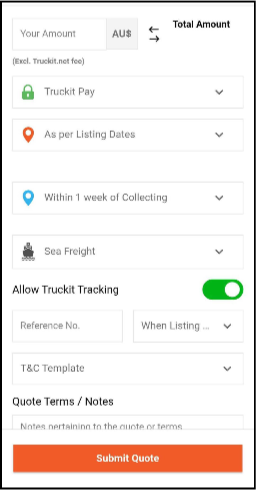
Step 3. When adding a new quote, be sure to 'Allow Truckit Tracking'
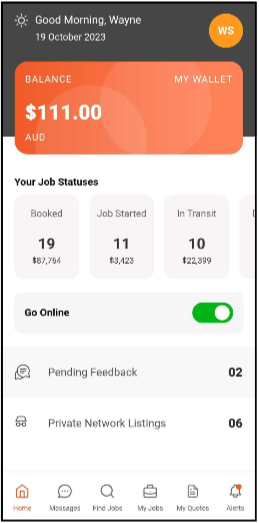
Step 4. Next you need to ensure you 'Go Online'
Step 5. When you're ready for the job to commence, simply hit the 'Start Job' button and the tracking will then become visible to the customer.
So, what are you waiting for?
Download the Truckit.net Provider App and enable tracking on your quotes today, to take your customer service to the next level!


Are you an avid enthusiast of uncovering unique items through auction houses like Grays, Pickles, or Lloyds? Whether you're a seasoned auction-goer or a first-timer, this comprehensive guide will assist you in successfully getting your prized items delivered straight to your door!
The initial step in transporting your auction item involves understanding the policies of the specific auction house. These include specific requirements that a transport provider must adhere to. For example, you will need to enquire about opening hours, whether there is truck access, what loading facilities are available (only if required!) etc. You'll also need to provide the documentation to your selected transport provider to allow them to collect your item on your behalf, so check what's required (see Step 5 below).
When checking the pick-up policies of the auction house, make sure to enquire if your item is appropriately packaged. For example, will the item be palletised, in a box or loose? If the auction house doesn't provide packaging services you might need to arrange professional packing with the transport provider.
Armed with your pick-up and package information, the next step is to source quotes from various transport providers (....Truckit is amazing at this by the way..!). You will need to ensure you are relaying the correct details of your item to receive accurate quotes. A good starting point is your invoice for specific information about the item and its dimensions. If you are unsure, we recommend contacting the auction house to get the right information - it will help get the fastest and best quote! Providing incorrect information on dimensions, volume/number of items, or weight can potentially lead to additional charges.
It is also important to communicate if you are purchasing a vehicle from an auction house's salvage yard as some transport providers will not be able to transport these types of cars. This is due to salvage cars often requiring specialised equipment for loading, unloading and to ensure the safe shipment of the vehicle. To read more about shipping a salvage vehicle click here.
Regardless of the shipping method and transport provider you choose, you should always enquire about insurance. This includes asking if they have insurance, what this covers and the amount of coverage. In cases where the transport provider lacks the necessary insurance, acquiring additional cover is advisable to ensure the protection of your valuable items.
In order for your chosen transport provider to collect your item from an auction house they will require a copy of your zero-balance invoice (proof of payment), a copy of your driver’s licence as well as a signed, written letter authorising them to collect on your behalf.
When your items are delivered, take the time to inspect them for any signs of damage that may have occurred during transit. If you notice any issues, document them with photographs and contact the transport provider immediately. Please note, you will need to have photographic evidence to prove the item was not damaged before transit to be able to make an insurance claim, so please ensure you have received photos from the auction house prior to the transport.
Truckit.net is a recommended carrier of Grays Online and we also have many transport providers well-versed in collecting items from other auction houses such as Pickles, Lloyds and Manheim. To get a transport quote for your auction purchase simply visit our get a quote page and choose the freight category that best matches what you need to move. On the get a quote form you will find the option to select if the item is an auction purchase and what auction house it is coming from. It is important you indicate it is coming from auction so the providers can quote accordingly.
After listing your purchase, you'll begin to receive quotes from various transport providers. This gives you the flexibility to select the one that aligns best with your requirements. On our platform, you can explore the profiles of these providers, which includes their job completion rates and feedback from past clients. Additionally, you have the ability to directly communicate with the providers to address any inquiries you may have about their quotes and services.
We have partnered with one of Australia's leading cargo insurers, National Transport Insurance (NTI), to offer affordable insurance premiums to customers up to the value of $50,000 on qualifying items. You can easily get an insurance quote on our platform prior to booking and you can add this to your cart at checkout.
For your convenience and security, we offer a payment option known as 'TruckitPay'. While this method requires full payment upfront, it is then securely held within a third-party online wallet until the delivery of your item is successfully accomplished. Once you've made your choice of a transport provider and completed the booking process, all relevant contact and job details will be shared, facilitating a smooth transport experience for your auction item.
To ensure your precious purchases reach you safely, follow this guide and visit Truckit.net to get a quote today. Happy bidding and safe transporting!
Boat transport, especially interstate, can be a daunting challenge if you have never done it before. This is why many boat owners choose to use specialised boat transport companies to get their boats moved safely and efficiently. However, even with outsourcing the transport, the process may not be as simple as one might like. This is why we have created this step-by-step guide to getting your boat transported.
Before you find a company to transport your boat you will need to ensure you have all the required details about your specific boat so you can source the quotes. This includes knowing the type of boat (sailing boat, power boat, yacht etc.), the make & model as well as the weight & dimensions. The more precise the details, the more accurate the quotes you will receive. This step is crucial because, if the transport company is supplied with incorrect information, they may issue price increases later in the transport journey. They may also not be able to complete the job if your boat is larger/heavier than what they allocated for.
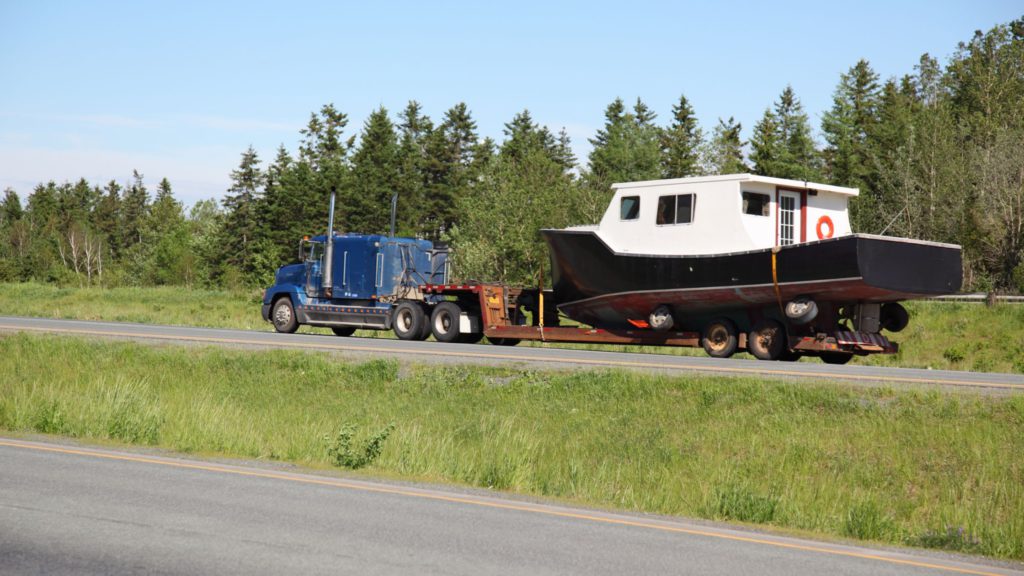
The next step is to source quotes from multiple different boat transport companies. It is important to shop around to get an idea of what the current market value is for your job and to ensure that you are getting a price that reflects a good service. It is also recommended you check the nature of the service in the quotes you receive. For example you may receive quotes for your boat to be towed as well as transported on a truck. It is important you confirm what type of service it is prior to booking, especially if your boat is not on a registered trailer or is unsuitable for towing.
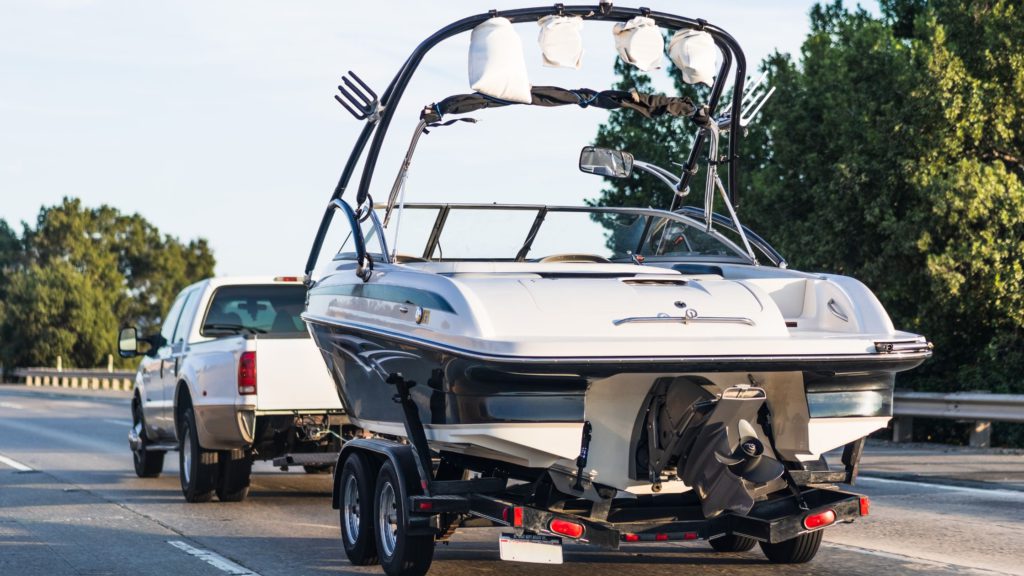
The next step is choosing a reliable boat freight business as this is essential to guarantee the successful movement of your prized possession. We always recommend conducting all necessary due diligence on the freight company, including checking their reviews and ensuring they are a legitimate Australian business. It should be noted that the cheapest quote you receive may not always be the best option. You should choose a quote from a provider who is trustworthy, has experience and is communicative during the quoting stage. A transport provider who answers all your questions promptly prior to booking is a good indication of the level of service they will supply after booking.
Before transporting your boat, you need to prepare it for transport. This involves removing all loose items from your boat, including sails, electronics, and other gear. Any items that cannot be removed should be strapped down or packed away to ensure no damage occurs to your goods or your boat. All hatches and doors should also be secured during transport. We recommend taking photos of your boat from all angles prior to collection, noting down any pre-existing damage. This will make the process of insurance claims easier, in the unlikely event something was to happen during transit.
To guarantee a seamless experience, we recommend maintaining communication with your chosen provider who is transporting your boat. We also recommend providing an additional contact during the booking process as a precautionary measure. This will enable the transporter to reach out to someone in case of any unforeseen circumstances where you cannot be contacted. If tracking is offered, we also recommend checking this frequently to remain updated on where your boat currently is.
With Truckit.net, you can easily find the right transport provider to move your boat. Our platform connects you with over 6000 transport providers who can move anything, anywhere within Australia. To get started, simply fill out the listing form on our website under the ‘Boats’ category and select the relevant subcategory for your boat type. This includes power boats, sailing boats, yachts and ‘other’. You will be required to provide some basic details about your boat, such as its make and model, dimensions, whether it's empty or not, if it’s on a registered trailer and how you want it moved. You can even add photos and more detailed descriptions of the condition of your boat; however, this is optional.
Once you've listed your boat, you'll start receiving quotes from different transport providers, giving you the option to choose the one that best suits your needs. Our platform lets you view the profiles of transport providers, including their completion rates and reviews from previous customers. You can also message providers to ask any questions you might have about their quote and service.
We offer a secure payment method through ‘Truckit Pay’, which requires full payment upfront but holds it in a third-party online wallet until the delivery is completed. Once you've chosen a transport provider and booked, all contact & job information will be released, and your boat will then be transported!
Don't wait any longer to transport your boat. Start your journey with Truckit.net today and benefit from our easy-to-use platform that connects you with multiple transport providers all in one place.
Australia is home to a wide range of beautiful landscapes and vast open spaces, making travelling via caravan a very popular way to explore the nation. While sightseeing via a caravan is often considered a very relaxed way to travel, getting your caravan moved inter or intrastate, may not be as easy. It can take a long time calling a whole bunch of different transport companies trying to get a quote, leaving you feeling exhausted and stressed. This is where we come in! Truckit.net offers a platform where you can get connected with over 6000 transport providers all in one place.

There are a number of reasons someone would need interstate caravan transport. Whether it be because your caravan has broken down while exploring the country, or you are relocating and cannot take it yourself. Whatever the reason we can help get your caravan transport started! However, there are a few key things to remember when arranging your caravan for transport.
Perhaps the most crucial part of the transport process is to choose a reputable company to move your caravan. This means conducting all necessary due diligence on the business. We recommend reading their reviews and asking any questions you have about their service prior to booking.
It is very important when sourcing quotes for your caravan transport that you ensure you are describing the caravan clearly and accurately. This includes ensuring you communicate the make and model, the dimensions, and the condition of your caravan. Transport companies will also need to know if your caravan is roadworthy and registered. Photos are a great way for transport providers to clearly see the caravan and so they know the best method for it to travel (e.g., towed or trucked). If you are thinking of having your caravan towed, it is also beneficial to convey what type of hitch your caravan has and if it has electric brakes. Additionally, it can be helpful for the transport providers to know what is inside the caravan as well. For example, having large furniture items or extra goods inside may affect the transportation costs.

It is important to remember that transit times are usually in business days and are often estimates only. Owner drivers and smaller transport organisations are more likely to provide a firm delivery date but please be mindful that due to the unpredictable nature of the transport industry, delivery dates could potentially change. Weather events, mechanical issues, road accidents and closures can all effect transit times and any delays you may experience are often not of the fault of the transport provider. Therefore, it is important to arrange transport early if you need your caravan delivered by a certain date. It is also prudent not to plan anything based off a delivery timeframe, such as flights, accommodation, car hires etc.
Another key to ensuring your caravan transport goes smoothly is to ask about insurance. It is recommended to contact the provider you are thinking of booking with to confirm if their quote includes insurance and if it does, what the policy covers. It may be prudent to take out your own insurance policy so you can rest easy knowing your caravan is covered. At Truckit.net, we have partnered with the insurance company NTI to provide our customers with the security of knowing their goods are covered. You can get an insurance quote on your listing page, and you can add this premium to your ‘cart’ at checkout.
Prior to your caravan transport we recommend documenting the condition, ensuring you disclose any faults to the transport provider. This includes taking multiple photos of the caravan from every angle, being sure to record any scratches or damage. This will make it easier in the unlikely event an insurance claim must be made. To prepare your caravan for transport loose items such as kitchenware, bedding, and personal items should be removed. If an item or furniture cannot be removed than it is important that you ensure it is secured to prevent any damage to the item or the caravan itself. It is also suggested that any awnings attached to the caravan should be retracted into the standard factory position.

Finally, we believe a vital part of ensuring your caravan transport interstate goes smoothly is to keep communication lines open throughout the entire transport process. This means during the booking process, while it is in transit and even after it’s been delivered. It is also recommended that you place an additional contact down on the booking. This will ensure if anything goes wrong and you can’t be contacted, then the transporter has the ability to get a hold of someone.
Truckit.net offers the ability to get connected with over 6000 transport providers who can help you move your caravan. All you need to do is fill out the listing on our website under the category 'Rvs, Caravans & Trailers’ and select the subcategory ‘caravans’. You will be asked to provide some details about the caravan such as the make and model, the dimensions, if it’s empty and how you want it moved. You even have the option of adding extra details so you can describe the condition of the caravan and you can place a photo of it as well. Then you simply need to state where it is coming from, the loading/unloading location and the dates you want it moved. Following this you create an account, so you always have access to your listing. Once you have completed the listing process, quotes from our transport providers will start to come in, and you will receive email notifications when they arrive.
The benefit of using our service is that you can source multiple quotes from different types of providers all in one location. So, whether you are looking for a premium or backloading service we can connect you with the providers to suit. Once you receive quotes, you can view the transport providers profiles to see how many jobs they have done, what their completion rate is and read their reviews. You will also be able to message providers to make any enquiries regarding their quote and what it includes. After that you simply choose the best provider to suit what you are looking for. We also offer secure payment method options as well so you can rest easy knowing your funds are safe. Truckit Pay works by taking full payment upfront, however, we hold this payment in a third-party online wallet until delivery occurs. To learn more about Truckit Pay click here. Once your job is booked in, all contact details are released and your caravan transport journey can then begin.
So, what are you waiting for? Get your caravan transport started with Truckit.net today!
When moving long distances, proper organisation and care can ensure a seamless journey for both you and your beloved furniture. As the moving process can be turbulent, proper care is essential to ensure your furniture doesn’t end up damaged or lost throughout the journey.
From packing to planning, we’ve collected everything you need to move your furniture quickly and safely, at a minimal cost.
It's important to start your moving process by making a thorough list of everything you need to move. This includes not just large pieces of furniture, but also smaller household items and any decorations or knick-knacks you want to bring with you. Having a list of inventory will help you keep track of everything and ensure that nothing is left behind. It's also a good idea to take inventory of all your belongings, including any valuable items that you may want to insure.
Before you start packing, it's a good idea to consider the layout of your new home and measure doorways, stairwells, and other spaces to make sure your furniture will fit. This is especially important for larger pieces, as you may need to disassemble them in order to get them through tight spaces. If you're hiring a professional moving company, they will typically be able to handle this for you, but it's always a good idea to be prepared. If you're moving into a smaller space, you may need to sell or donate some of your larger furniture pieces or find a storage solution.
When it comes to packing your furniture, it's important to use appropriate materials for protection during the move. This includes bubble wrap for delicate items and surfaces, furniture pads to prevent scratches and dents and stretch wrap to keep everything in place. When packing large items, make sure to secure drawers and doors with tape to prevent them from opening during transport.
When possible, it’s best to remove any items that are attached to the furniture, such as mirrors or lamps, and pack them separately. If you're using a professional moving company, they will likely provide most of the necessary packing materials, but it's always a good idea to have some extra on hand just in case.

Labelling your boxes and furniture is also essential for a seamless move. This will make unpacking easier as you and your moving company can unload items directly where they belong. Clearly mark each box with the room it belongs in, as well as any special instructions.If you're hiring a moving company, they may provide their own labels, but it's always a good idea to double-check and make sure everything is clearly marked. It's also a good idea to label any boxes containing fragile items or items that need to be handled with care.
In addition to packing and labelling your belongings, you may also want to consider using insurance to protect your furniture and other valuable items during the move. This can give you peace of mind in case of any accidents or damage during transport. Moving insurance typically covers the cost of repairing or replacing damaged items, and it can provide a sense of security and protection during what can be a stressful time.
If you want to make your move as seamless as possible, consider hiring a professional moving company. They have the experience and equipment to safely transport your furniture and household items to your new home and can save you the stress and headaches of doing it yourself. When choosing a moving company, make sure to do your research and choose a reputable company with good reviews and a proven track record.
Collect multiple quotes from different companies and be sure to ask about any hidden fees or surcharges that may not be included in the initial estimate. With the right planning and preparation, moving long distances with your furniture can be a smooth and stress-free experience.
Moving long distances with furniture can be a daunting task, but with the right preparation and planning, it can be done smoothly and stress-free. If you're looking for a reliable and professional moving company to help with your relocation, be sure to check the TruckIt.net network. Collect quotes, browse providers and connect with moving companies all across an easy-to-use interface. For more information, contact us to learn more about how we can assist with your move.
Moving long distances can be a daunting task, but with careful planning and preparation, it can be a smooth and successful process. From packing and planning to before and after checklists, we’ve compiled everything you need to ensure you have a seamless move.
Here's everything you need to know about how to make your long-haul move a smooth experience:
Long-haul moving refers to the transportation of goods over a long distance, typically across the country. It can also refer to international moves, depending on the distance and location. Before you move, it is important to start planning and organizing as early as possible. This will give you plenty of time to gather the necessary documents, research moving companies, and start packing.

The best way to avoid feeling overwhelmed is to start packing early and do it gradually. Consider following these tips to streamline your packing:
Hiring experienced professionals can alleviate much of the stress of a long-haul move. Movers handle the heavy lifting, transportation, and logistics, allowing you to focus on settling into your new home.
Truckit.net is Australia’s leading platform for hauling services, connecting you with reliable trucking companies. By providing access to quotes, reviews, and tailored services, Truckit.net simplifies the moving process, making it more affordable and efficient.
To get a quote for moving your home visit our website today!
So you’ve created a listing and have received some quotes but you’re finding the process of choosing a transport provider a bit daunting? Here at Truckit.net, we understand that making decisions, especially important ones, isn't always easy. So we’ve created the following guide to help you choose the provider that is right for you.
Step 1: Open your listing
The very first step to choosing a provider is to log onto your account here, go to ‘My Listings’ and click on the active listing you are wanting to view. Scroll down to where the quotes are displayed and you are ready to head onto the next step.
Step 2: View the provider's profiles
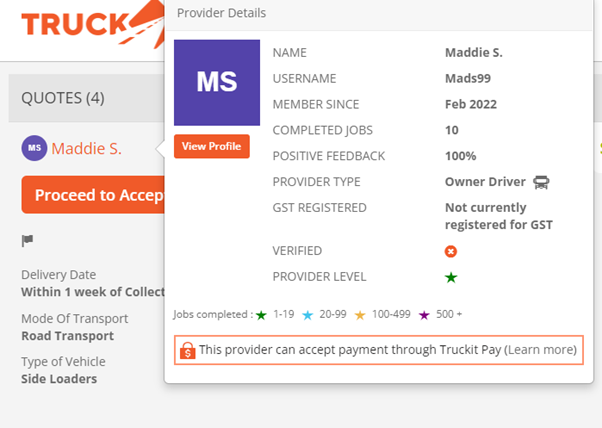
Viewing profiles can be done in two ways, first by hovering over the provider’s name to display a snapshot of their profile or by clicking on their name to show the profile in full. The important information to take note of in a provider's profile is the positive feedback, completion, and cancellation rates. You can also read the reviews from their previous customers as well as their about us to learn a bit more about the company and how they operate.
Step 3: Read the Quote Specific Terms
This step is critical to ensuring the quote and by extension, the provider is right for you as this section is where providers display their terms and conditions. Policies such as cancellation, demurrage, and futile fees will be displayed here as well as whether the quote includes insurance. It is also important to read this as limits surrounding the weight and dimensions of the item will also be specified as some of our providers have instant quotes and as such will not be reading the listing before quoting. It is therefore your responsibility to ensure that the quote matches the specifications of the item/vehicle that you are freighting. If you are looking for interstate car transport this section will also address whether the provider allows goods (personal belongings) to travel in the car.
Step 4: Message the provider
At this point, if you still have questions about the provider's service, would like clarification on insurance, or even are just a bit hesitant and would like to talk to someone you can message the provider directly. This messaging service is available underneath each individual quote, however, messages can also be displayed at the bottom of the page. Messaging the provider will help you build a rapport and is often where you decide if they are the right fit for you. It is important to remember that many providers are available during work hours only and some are owner-drivers so they may be on the road, out of service, or sleeping so please allow up to 24 hours for a response. Due to the public nature of the messaging service, to protect the safety and privacy of all users we do ask you to please ensure you do not communicate personal or business contact details, full addresses and any other identifying information to the providers, as per Truckit.net rules and regulations.
Step 5 - Repeat steps 2 - 4
Replicate this process with any other providers that quote on your listing and then compare & choose the provider that either offers the best price, service, or communication.
Step 6 - Accept or Invite
Now that you have a better idea of who your providers are you can decide whose quote you would like to accept. To do this click on the orange “Proceed to Accept’ button underneath the quote and follow the prompts to book your job. After a booking is confirmed you will receive the provider's contact details and you can then talk to them directly. If none of the providers who have quoted fit the criteria you are looking for you can invite more to quote on your job. When you click on the ‘Invite providers’ button located at the top right-hand side of the page, it will bring up a catalogue of providers who have been matched to the job. You can then view these providers' profiles as well before inviting them to the listing.
We hope this comprehensive guide has helped make committing to a transport provider a bit easier. If you require further assistance please do not hesitate to give us a call at 1300 859 850 or send us an email at support@truckit.net.
