


Truckit.net is a vibrant marketplace, connecting freight owners with transport providers.
Set up a professional profile
Your Truckit profile will be the first place customers look when deciding which transport provider is best suited to handle their delivery. The best profiles will include a concise but clear statement outlining your history
Smile for the camera
It's amazing what difference a profile picture can make to
Communication is key
It seems an obvious point, but it can not be stressed enough. The nature of an online marketplace and the need for trust means communication is the and a lack of communication can be a barrier to success.
Most customers will understand a delay or two, but simply want to be told so beforehand, otherwise they can feel left out of the loop and worried about their goods.
Focus on the jobs that are right for you
Truckit.net provides extensive search filters on the Search for Jobs page which allow transport providers to narrow down available loads by area, state or along an existing route. You can then filter by freight category to make sure you are only viewing the jobs most relevant to you. This saves time and ultimately money in scrolling through irrelevant loads.
Build a base of positive feedback
Every completed job gives you the opportunity to receive feedback from the customer. This feedback will be displayed on your Truckit profile to help future customers see the good work that you do. This is why it is essential to treat every job with the same level of professionalism as the last.

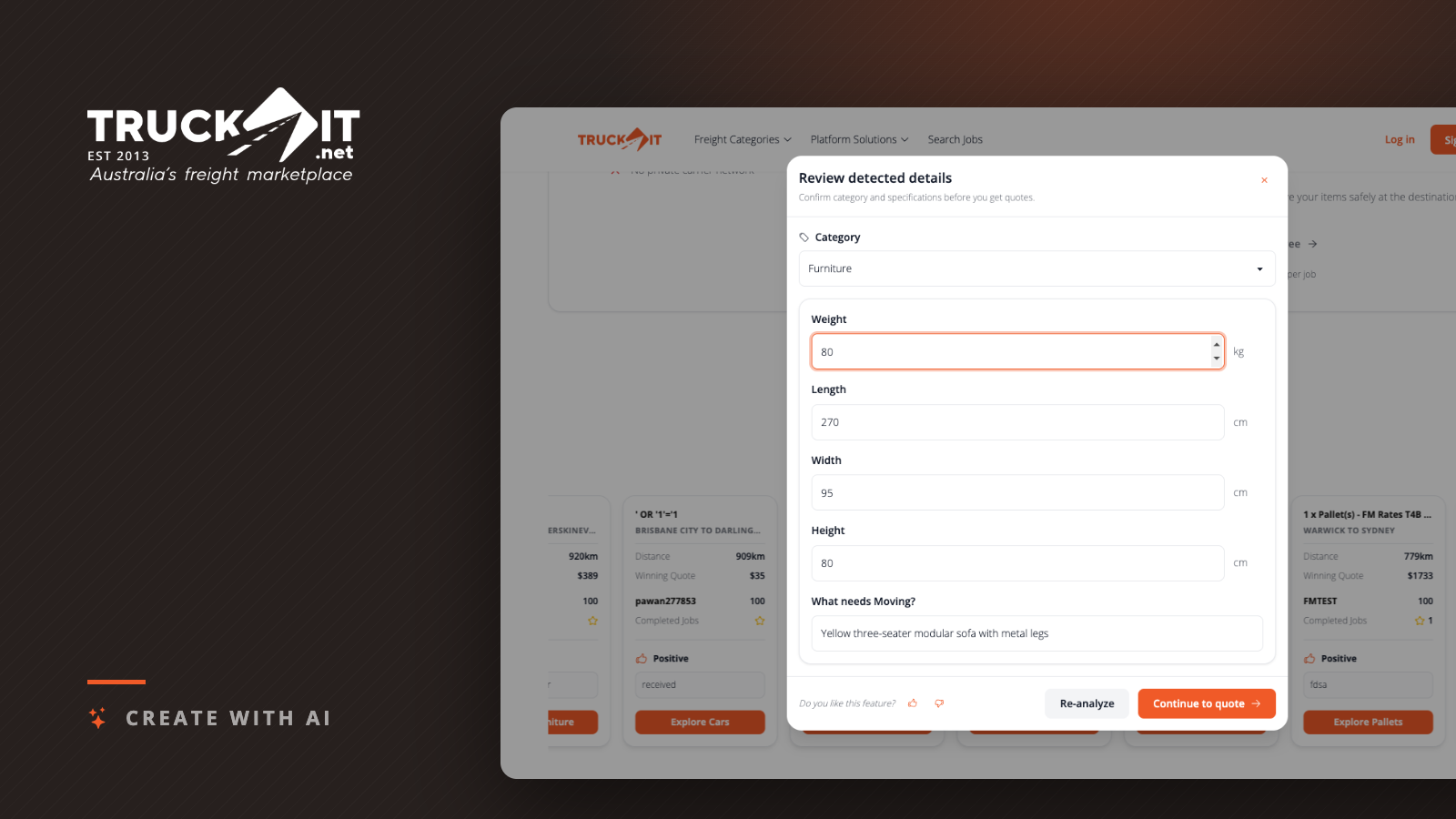
News · Product Update Your freight quote now starts with a photo Create with AI is live on Truckit. Photograph what you are moving and the listing fills itself in. TK Truckit Australia's freight marketplace 14th of September 2026 · 5 min read Take a photo of the thing you need moved. That is now enough to start a freight quote. Create with AI is live on Truckit. Upload a picture of your couch, your dresser or your pallet of stock, and Truckit reads the image, works out which freight category it belongs in, and estimates the weight and dimensions. […]
News · Managed Services Freight is the friction your business doesn’t need. Here’s how managed services remove it. Why more Australian businesses are handing their freight to a managed service, and what they get back. KD Kieran Dawkins Head of Managed Services · Truckit.net 18 July 2026 · 5 min read While most businesses can understand a freight rate card, a lot aren’t quite aware of the true freight costs to their business. Everything from the time it takes to procure and manage carriers, to increasing capacity at short notice, through to chasing ETAs, reconciling invoices, misaligned payment terms and […]

We’ve been busy building behind the scenes, and a wave of new features have just rolled out. Most of it points the same way: putting AI to work on the parts of freight that used to eat your time. Searching for jobs, writing your profile, matching the right provider to the right load. Here is what is live now, and what we are working on next. You can now find freight jobs just by asking Type "find container jobs within 100km of Maryborough" into the Search Jobs page, and Truckit knows exactly what you mean. No filters to set, no […]
