


While many online businesses are legitimate, it can be easier to fall for an online scam due to the anonymous nature of the internet. Scammers use the latest technology to set up fake retailer websites, email receipts, and text messages that look like genuine online stores and responses.
Online scams are sophisticated messages which often use professional-looking brands and logos to look like they come from a business you know. At first glance, the level of sophistication can make it difficult to determine if it is real, or fake.
It is common that scams involve asking you for upfront payments in times of an ‘emergency’, or to pay for products or services. Scammers might even go as far as impersonating a friend, family member, or business that you frequently communicate with online, to try and convince you of their ‘story’.
While many online businesses are legitimate, it can be easier to fall for an online scam due to the anonymous nature of the internet. Scammers use the latest technology to set up fake retailer websites, email receipts, and text messages that look like genuine online stores and responses.
Online marketplaces are one of the most popular platforms for scammers to conduct their activities. Below are some of the tactics they use to cover their tracks (according to besedo.com):
Scammers look for accounts that have a good reputation and buy them to publish fraudulent ads.
2. Ad modification
Scammers submit mundane ads with real photos, prices, and reliable data. But once the ads are accepted, they change them - lowering prices and deleting/adding photos.
3. Trojan ads
Scammers create accounts and begin publishing conventional ads. Once a reliable precedent is set, they begin posting fraudulent ads instead.
4. Change IP addresses
This is when scammers continually change IP addresses to avoid being tracked.
5. Multiple ad publication
Scammers submit multiple ads in big quantities; to disguise their fraudulent ones.
If you think you have encountered a scam, talk through your situation with a friend, family member, or trusted colleague as a quick sanity check because some scams are so sophisticated that they can effectively play with your emotions. Asking for an outsider’s view can help you reframe your thoughts and put you on the right track to remedying the situation. Then, contact the retailer that the scammer is claiming to be through the official website to make them aware of the situation. If you are not satisfied with the response from the retailer or more action is required, you may be able to contact your bank to arrange a charge-back through them, or your credit union if you have paid by card.
For further assistance, you can file a complaint through your state government website, and it is highly recommended to make a complaint to the Australian Competition & Consumer Commission (ACCC).
Queensland Government Consumer Complaints: https://www.qld.gov.au/law/your-rights/consumer-rights-complaints-and-scams/make-a-consumer-complaint/use-the-contact-list
ACCC: https://www.scamwatch.gov.au/report-a-scam
Once you have completed these reporting processes, spread the word to friends and family to make sure they are aware and protected.
To arm yourself in the future, you can use online resources like Scam Adviser. Scam Adviser asks for details about the potential business scam and produces a trust score based on what they find by scanning the details across the internet.
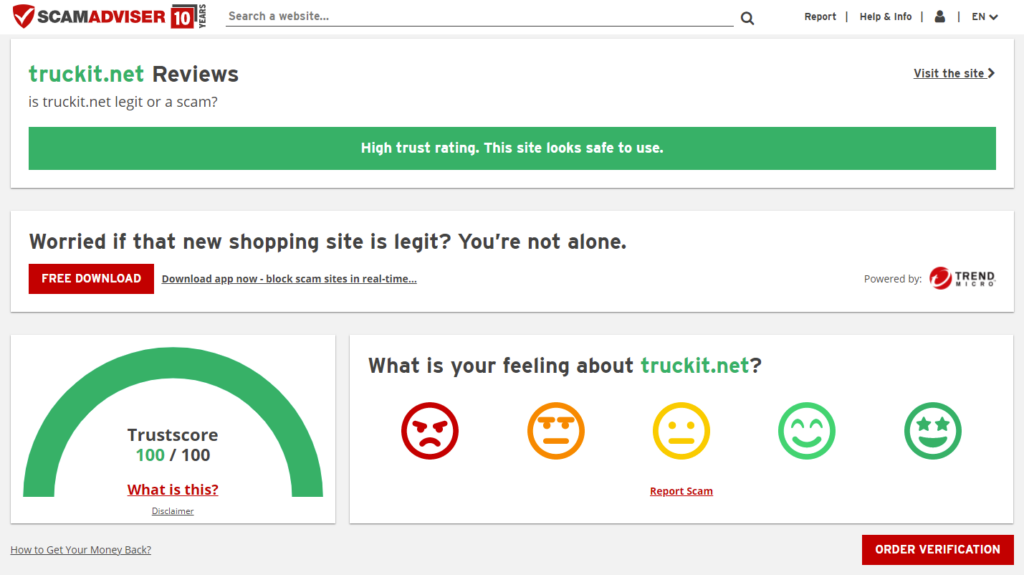
Scam Adviser: https://www.scamadviser.com/check-website/truckit.net


News · Managed Services Freight is the friction your business doesn’t need. Here’s how managed services remove it. Why more Australian businesses are handing their freight to a managed service, and what they get back. KD Kieran Dawkins Head of Managed Services · Truckit.net 18 July 2026 · 5 min read While most businesses can understand a freight rate card, a lot aren’t quite aware of the true freight costs to their business. Everything from the time it takes to procure and manage carriers, to increasing capacity at short notice, through to chasing ETAs, reconciling invoices, misaligned payment terms and […]

We’ve been busy building behind the scenes, and a wave of new features have just rolled out. Most of it points the same way: putting AI to work on the parts of freight that used to eat your time. Searching for jobs, writing your profile, matching the right provider to the right load. Here is what is live now, and what we are working on next. You can now find freight jobs just by asking Type "find container jobs within 100km of Maryborough" into the Search Jobs page, and Truckit knows exactly what you mean. No filters to set, no […]

Introducing Rates Manager: Stop Quoting Manually. Start Winning More Jobs. Product Update · For Providers Introducing Rates Manager: Stop Quoting Manually. Start Winning More Jobs. Truckit.net May 2026 5 min read Rates Manager is live in your provider portal. Upload your pricing once and Truckit quotes on your behalf, instantly, 24/7, without you lifting a finger. Every job you have missed because you were on the road, asleep, or too busy to respond is a job that went to someone else. Not because your price was wrong. Because your price was not there when the shipper needed it. Rates Manager […]
