
Due to the ongoing volatility in fuel prices, Truckit is clarifying our stance on price adjustments. While our core policy remains that quotes should be all-inclusive, we recognise that rapid fluctuations in operating costs can occasionally necessitate a post-booking fuel levy.
To be clear, the fundamental way you quote on Truckit isn’t changing: you should still aim to incorporate all anticipated fees, charges, and overheads into your initial quote. We are simply being more tolerant of price adjustments made after a booking has occurred, provided they are strictly related to fuel costs and are handled with total transparency.
The most critical requirement is that any price increase must be discussed and agreed upon with the customer prior to collection. Adding undisclosed fees after a job is underway remains a breach of our terms.
Please ensure you adhere to the following policies to protect your account standing:
1. Timing of Adjustments
Any request for additional fuel funds must be applied and agreed upon with the customer before you arrive for pickup. Under no circumstances should a price increase for fuel be raised at the point of delivery.
2. Customer Refund Entitlements
Because a fuel levy is an additional cost applied after the initial booking, customers are not obligated to accept it. If a customer does not agree to the new price, they must be allowed to cancel the job and receive a full refund. Cancellation fees will not apply to jobs cancelled due to fuel price increases.
3. Professional Conduct & Transparency
Expecting a customer to agree to an undisclosed price after a job is already underway is not reasonable. All price discussions must be finalised before collection. To support our providers during this period of market instability, Truckit will temporarily waive all fees on price increases.
Truckit will be monitoring terminal gate fuel prices and investigating all reported violations.
4. Required Strategies for Providers
To protect your margins while staying compliant, we recommend the following:
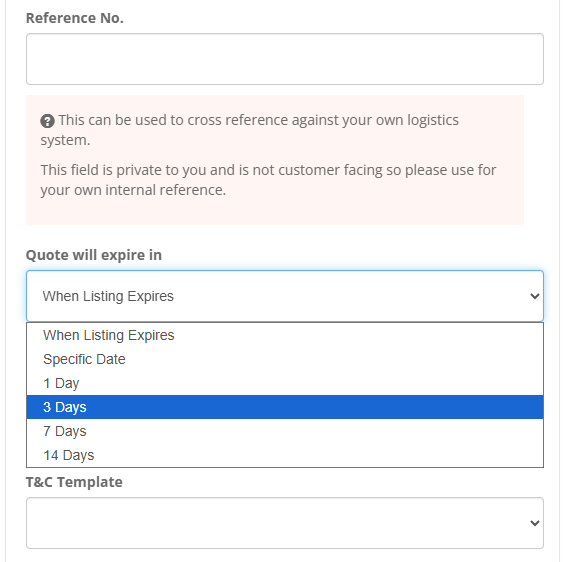
Utilise Quote Expiry Dates: Please use the "expiry" function to limit how long your quote remains valid (e.g., 3 days). This allows you to re-quote based on the most current fuel prices if the customer takes longer to book.
Example of quoting form:
Update your T&Cs: We suggest adding a specific caveat to your Terms & Conditions.
Example: "This quote is calculated based on current fuel prices. Should prices increase significantly between the booking date and collection, a fuel levy may apply. This will be discussed and agreed upon prior to pickup."
We appreciate your continued efforts to provide a high level of service during these challenging market conditions. By following these guidelines, we can ensure the platform remains a reliable place for both providers and customers.
The Australian transport and logistics sector is currently facing a period of significant disruption. A combination of escalating operational costs and severe weather events has created a challenging environment for both transport providers and customers. To ensure transparency and help you manage your upcoming transport requirements, we would like to provide an overview of the factors currently influencing the market.
The rising cost of fuel remains a primary driver of price adjustments across the industry. Beyond the increase in per-litre costs, sporadic fuel shortages in specific regions have added a layer of complexity to route planning. Transport providers must now account for higher overheads and the potential for refuelling delays, which is reflected in current market pricing.
Significant portions of Australia are currently experiencing various levels of flooding & extreme weather. These conditions have a direct impact on the safety and viability of transport routes:
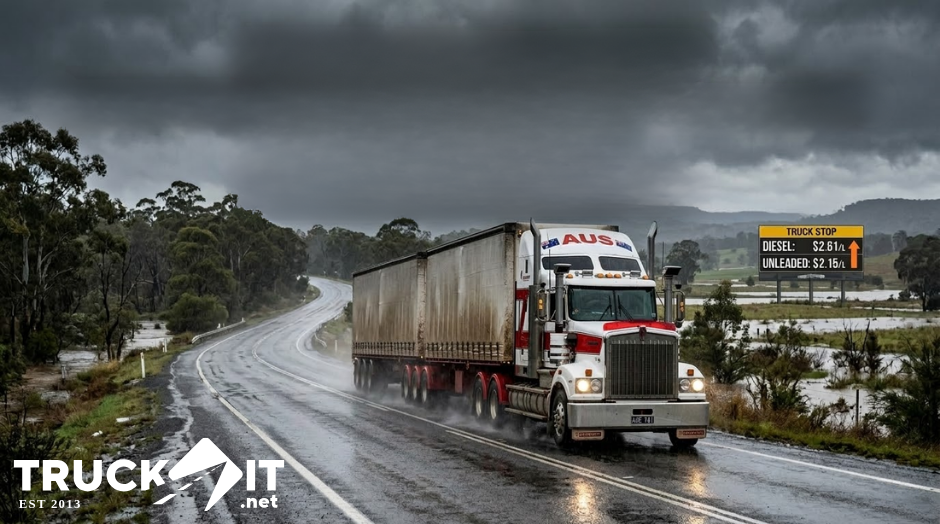
In light of these events, we ask our customers to consider the following when listing jobs:
1. Realistic Pricing and Transit Times
We encourage a realistic appraisal of current market rates. The quotes you receive will reflect the increased difficulty and cost of organising transport in the current climate. Furthermore, please allow for additional time regarding delivery windows, as detours and safety-related delays are currently unavoidable.
2. Extended Quoting Periods
You may notice that it is taking longer for providers to submit quotes on new listings. Many operators are analysing weather forecasts and road reports before committing to a job. By waiting for clearer conditions, they ensure that the quote provided is accurate and that the job can be completed without mid-transit complications.
We understand that these delays can be inconvenient. We appreciate your patience and continued support of the transport providers working to keep Australia moving!
By requesting a quote through our website, you can connect directly with experienced providers who are analysing these road conditions in real-time. This ensures that the quote you receive is not only fair but accurately reflects the current reality of the Australian transport landscape.
Shipping freight shouldn't be a gamble. In Australia, securing the best price isn't about picking the cheapest option—it’s about accuracy and transparency.
Maximising value with Truckit.net starts with an accurate listing. By providing precise dimensions, clear photos, and flexible timing, you avoid surcharges and unlock competitive rates. Choosing the right service model, like depot-to-depot, can also significantly slash costs compared to standard deliveries. Finally, disclosing site constraints upfront ensures providers arrive with the correct equipment, eliminating futile trip fees.
The following guide breaks down these four essential strategies to streamline your logistics and protect your budget.
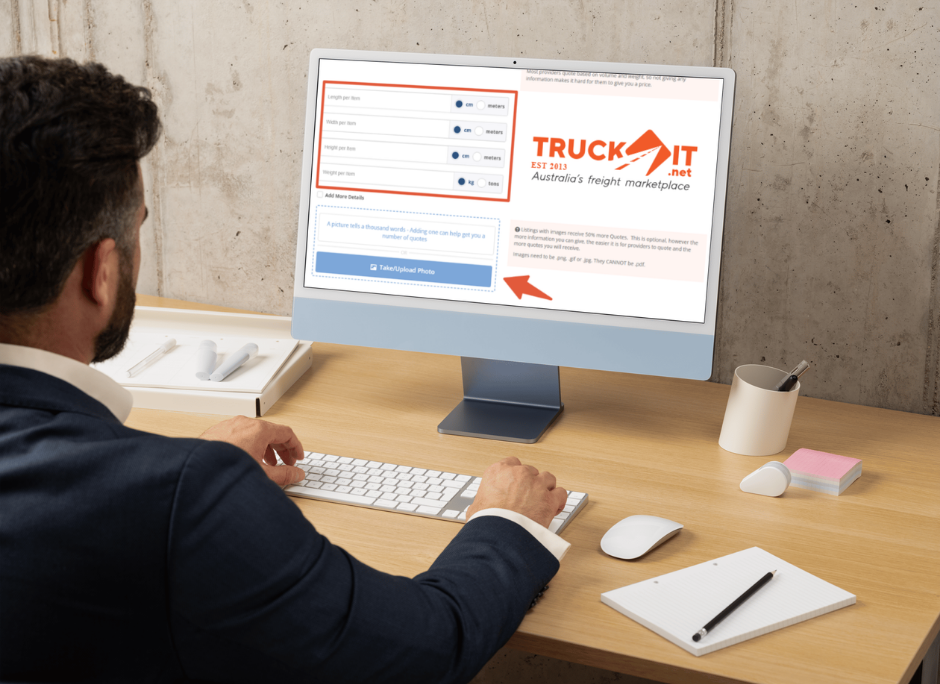
We know that weighing and measuring large items can be a bit of a chore, but taking those few extra minutes makes a world of difference. In the world of logistics, even a small "guestimate" on weight or dimensions can lead to tricky situations once the goods are collected.
One of the easiest ways to slash costs is to consider depot-to-depot shipping.
Door-to-door services are convenient, but they require the provider to arrange local collections and deliveries. If you are in a regional area or a residential street, this often requires smaller trucks to navigate limited access, adding to the freight cost. If you have the means to drop off or collect your goods from a local depot, you can bypass these surcharges entirely.
Finding the Middle Ground: If you have the means to assist at one end of the trip but not the other, you can still save on your freight costs. For example, if you are purchasing a car from an auction house in a different state, you likely won’t be able to take it to a depot, but you might be able to collect it from one near your delivery point. Many providers offer door-to-depot or depot-to-door pricing. This is a fantastic middle ground that keeps costs low while still meeting your specific requirements.
The "Call to Meet" Alternative: Keep in mind that some providers—particularly smaller operators—may not have depots available, or there may not be one in your specific area. In these cases, a "call to meet" can be an excellent alternative. This involves meeting the provider at a mutually agreed location, such as a truck stop or a fuel station. This is most common for drivable & towable vehicles, but it can also be a great option for smaller goods that can be safely hand-unloaded.
How your goods are loaded and unloaded can also impact your quote price. To secure the best value, it’s essential to be clear about what equipment is available at both the pickup and delivery points. While depots are already fully equipped to handle your freight, with door-to-door services, the providers rely on the information you provide to ensure the right truck is assigned to your move
Pro Tip: If you are ever unsure about the facilities at either end, it is much safer to select an option that indicates there are no loading/unloading facilities available (residential, storage or commercial without loading/unloading facilities). This ensures the provider includes the necessary equipment in their initial price and there is no need to pay for a "futile" visit when a standard truck arrives and can’t perform the job.
Every shipment is unique, and sharing the finer details upfront ensures a smooth experience for both you and your transport provider. To help operators provide their most accurate service, make sure to mention:
Providing precise details goes beyond simple paperwork; it is about ensuring your delivery day proceeds as smoothly as possible. Our goal is to help you avoid the logistical challenges that arise when a driver arrives without the specific equipment required to complete the task.
If a provider quotes based on having loading facilities available, but finds they need to manage the loading themselves, it can unfortunately result in:
By being as transparent and precise as possible on your listing, you’re helping providers give you their best service. It gives them the confidence to offer sharper pricing, knowing they are the perfect fit for your specific move.
As we wrap up 2025, I wanted to share some exciting updates on what we’ve been building to help your business grow and make your time on the road more profitable. Here is a look at what’s new and what you can expect in early 2026.
🌐 API Integrations = More Leads
We are now integrating with several external websites to direct even more traffic straight to Truckit.
⚡ ‘Book Now’ for the Furniture Category
We’ve expanded our "Book Now" feature to the furniture category for our premium business customers.
🚀 Launching in 2026: AI Job Matching
We’re thrilled to announce that AI-based job matching is arriving early next year!
We are continuously upgrading Truckit Pay to ensure it remains the most secure way for you to get paid. To better protect you from fraud and meet modern industry standards, we are rolling out 3D Secure (3DS) across all card payments in the new year.
This critical security upgrade has allowed us to significantly increase your payment potential:
Note: For jobs exceeding $20,000, our secure PayID or bank transfer methods will still be required.
The requirement for 3DS is determined by the customer's history on the platform. To learn more about how 3D Secure works click the link below.
Thank you for being a part of the Truckit community this year. We look forward to a massive 2026 together!
Cheers,
Rob
Pallets might not be flashy, but they’re the backbone of freight and logistics. Whether you’re sending one item or a full truckload, chances are a pallet is doing the heavy lifting behind the scenes. But here’s the thing – not all pallets are the same. Pallet size, weight, and capacity can seriously impact how efficiently your goods are moved and how much it’s all going to cost.
That’s why getting familiar with pallet dimensions isn’t just for warehouse professionals – it’s something every business (big or small) should know. A poor fit can mean wasted space, damaged goods, or added fees. But the right pallet setup? It keeps everything running smoothly from pickup to delivery.
Scott Finlayson, Operations Specialist for Truckit.net says;
"In the Australian transport industry, understanding pallet requirements is not just about compliance – it’s about efficiency, cost savings. The right pallet choices streamline logistics, reduce damage, and ensure smooth supply chain operations from pickup to delivery."
That’s where Truckit.net comes in. Our freight platform connects you with over 8,000 carriers and uses clever AI to give you instant quotes – helping you move goods smarter, faster, and without the stress.
When people talk about pallets, they’re usually referring to the standard kind – but what exactly is “standard”? The Australian Standard Pallet size – 1165mm x 1165mm – is built to match our racking systems, pallet jacks, and transport infrastructure perfectly.
Globally, things look a little different. In the US, for example, the most common pallet size is 48 x 40 inches (roughly 1219mm x 1016mm). Europe typically uses the Euro pallet, which measures 1200mm x 800mm. Each region has its own standard based on warehouse and container systems – which is why choosing the right one for your destination matters.
A key player in the Australian market is CHEP (Commonwealth Handling Equipment Pool). These familiar blue pallets are everywhere – built to exact standards (1165mm x 1165mm) and designed for repeated use through a pooling system. Every CHEP pallet is manufactured to the same size, ensuring consistency across loads and compatibility with equipment. Businesses rent CHEP pallets instead of owning them, which helps streamline logistics and reduce waste.
So, while “standard” might vary across borders, knowing your measurements – especially here in Australia – helps avoid delays, reloading issues, and unnecessary costs when booking freight through platforms like Truckit.net.
While the Australian Standard Pallet size (1165mm x 1165mm) is the go-to for most local freight, there’s no one-size-fits-all in logistics. Different industries and destinations call for different pallet sizes – and knowing the variations can help you plan better, pack smarter, and avoid surprises along the supply chain. In fact, there are at least six pallet dimensions commonly used across Australia and international markets, each suited to different warehouse systems, goods, and transport modes.
Aside from standard pallets, you’ll also come across mini pallets, typically used for smaller loads or tight storage spaces. These can be around 1100mm x 1100mm or even smaller, depending on the cargo. They’re often handy in retail, food service, or where warehouse real estate is limited.
On the global stage, sizes shift again. The Euro pallet (1200mm x 800mm) is common in European freight. In North America, the GMA pallet (1219mm x 1016mm) dominates. These other pallets are designed to fit efficiently within their local container and racking systems – and using the wrong size can throw off an otherwise smooth transport plan.
When shipping internationally or using mixed freight providers, understanding these differences is key. Truckit.net helps take the guesswork out of it by letting you input exact freight dimensions up front – so carriers can quote accurately, and you can book with confidence.
Pallets aren’t just about size – their weight and load capacity matter just as much when you’re planning a shipment. A standard wooden pallet in Australia typically weighs between 30–40kg, depending on the type of timber and whether it’s new or reused. Other standard pallet sizes for plastic pallets and metal pallets tend to be lighter or heavier, respectively, and are often chosen for specific hygiene or durability needs.
But what really counts is how much a pallet can carry. The average load capacity for an Australian standard pallet is around 1,000kg (1 tonne) for a static load – and slightly less when in motion or stacked. Push that limit, and you risk damaging your goods, the pallet itself, or the vehicle moving it.
Understanding pallet weight and pallet capacity affects how many pallets you can safely load onto a truck or container – and how much you’re paying to move them. Full truckloads are far more efficient (and better for the environment) than multiple half-full trips. That’s where smart planning and handling operations pay off.
With Truckit.net, you can easily factor in these weight details when submitting a job. Carriers can then respond with accurate, competitive quotes – keeping your transport lean, cost-effective, and stress-free.
When it comes to freight, every bit of space counts. How you stack your pallets can be the difference between a cost-effective full load and a costly underutilised one. Australian pallet standards have height restrictions for pallet stacking – typically no taller than 2.4 metres including the pallet itself. This ensures safe transport and compliance with road regulations.
Want to know how many pallets you can fit into a container or trailer? Here's a quick guide to standard pallet dimensions:
Efficient stacking isn’t just about piling pallets high – it’s about keeping loads stable, protecting goods, and ensuring transport compliance. Use strapping, shrink wrap, and consider the centre of gravity when loading to minimise the risk of damage.
Truckit.net gives you the tools to plan smarter. By entering your freight size and pallet info upfront, you’ll get matched with carriers who know exactly how to optimise space – helping you save time, money, and fuel on every trip.
While standard pallets do most of the heavy lifting in logistics, specialty pallets play a key role for certain products and industries. These are designed with specific dimensions, weights, or materials to meet unique transport needs.
Mini pallets, for instance, are perfect for smaller goods, retail displays, or confined storage spaces. They offer more flexibility and are easier to manoeuvre, especially in tight warehouse setups. You’ll also find custom-sized pallets used for irregularly shaped or fragile items like furniture, appliances, or machinery.
Certain industries require purpose-built solutions – like ventilated pallets for fresh produce or heat-treated pallets for international shipping compliance. Even firewood often gets stacked on specially-sized pallets for easy transport and resale.
The right pallet isn’t always standard. Specialty pallets can improve load security, reduce waste, and help meet regulations. And when listing your freight on Truckit.net, you can specify exactly what you’re shipping – so carriers come prepared.
Not sure how to choose the right pallet? It’s not just about size – it’s about matching your freight with the right fit to save time, money, and hassle. Start with your cargo type: Are you shipping bulky machinery, delicate goods, or fresh produce? Each one has different handling needs, and the wrong pallet can put your load – and your bottom line – at risk.
Next, think about your destination. If you're shipping within Australia, the 1165mm x 1165mm standard pallet is a safe bet. But if you're sending goods overseas, it’s smart to match the standard for that region (like Euro or US sizes) to avoid reloading or refusal at customs.
Lastly, factor in your mode of transport. Certain pallets are better for air freight, while others are built for trucking heavy duty pallets. Truckit.net makes it easy to input all these details up front – so you’re matched with carriers who’ve got the right setup from the start.
From standard pallet dimensions to weight capacities, pallets play a much bigger role in freight than most people realise. Choosing the right pallet is about protecting your goods, improving efficiency, and saving on transport costs. Whether you’re shipping across town or interstate, understanding pallet sizes, weights, and capacities helps you make smarter logistics decisions.
At Truckit.net, we’re here to make freight simple. Our platform connects you with a trusted network of carriers and uses AI-powered pricing to help you get accurate quotes fast – no more guesswork. Just enter your pallet specs, get matched with the right transport providers, and book with confidence.Ready to ship smarter? Head to Truckit.net and post your job today.
From January 2025, Australia will introduce mandatory climate reporting laws – a major shift aligning business operations with national climate goals and international frameworks like the Corporate Sustainability Reporting Directive. It’s part of a growing global push for accountability as governments and industries set clearer expectations on how companies disclose their greenhouse gas emissions.
For the transport and logistics sector, the impact is especially significant. With transport emissions making up a large portion of Australia’s carbon footprint, freight businesses will soon be required to track, measure and report their emissions across the supply chain – from fuel use to distance travelled.
This article breaks down the new transport carbon reporting requirements – what’s changing, why it matters for freight, and how Truckit.net is supporting the industry’s shift toward net zero emissions. Whether you're managing a fleet or booking regular shipments, now is the time to get ahead of compliance and lead with sustainability.
In early 2024, the Australian Government passed landmark legislation introducing mandatory climate reporting for many companies, set to begin on 1 January 2025. This move brings Australia in line with global ESG (Environmental, Social and Governance) reporting standards and signals a new era of climate accountability in business.
According to ASIC, the rollout will begin with large companies, particularly those already reporting under existing financial frameworks. Over time, the scope may broaden to include mid-sized businesses – especially those in emissions-intensive sectors like transport and logistics, where tracking and reducing greenhouse gas emissions is a growing priority.
This new reporting requirement won’t be a one-off task. Businesses will need to manage emissions data continuously and report on Scope 1 (direct), Scope 2 (indirect from energy use), and Scope 3 (supply chain) emissions. That includes detailed metrics on fuel consumption, kilometres travelled, vehicle load data, and more.
The aim is transparency: giving investors, regulators, and customers access to reliable, comparable carbon data that supports smarter decisions and sustainable growth. While the government has flagged an initial “grace period,” penalties for non-compliance are expected to follow.
For freight and logistics providers, this is the moment to build strong emissions reporting foundations. From adopting low-carbon liquid fuels to using digital platforms that help manage emissions data in real-time, the shift is about compliance and staying competitive in a carbon-conscious world.
Australia’s new reporting framework also reflects global shifts led by the International Sustainability Standards Board, which is shaping how emissions data is reported across industries worldwide. By aligning with these evolving standards, Australian businesses are better positioned to compete and collaborate on the global stage.
To support the transition, the government has developed Sectoral Emissions Reduction Plans targeting high-impact industries, including transport and logistics. These plans work hand-in-hand with national emissions reduction targets, providing guidance and accountability as businesses move toward net zero goals.
The Australian Renewable Energy Agency (ARENA) is also playing a vital role, funding innovative technologies and partnerships that support emissions reduction across the freight sector – from route optimisation software to trials of low-carbon liquid fuels.
Transport and logistics are front and centre in the carbon conversation – and for good reason. The sector accounts for a significant portion of global CO₂ emissions, with key contributing factors like fuel type, vehicle age, load weight, driver behaviour, and even the terrain (think steep inclines vs flat roads) all playing a role.
That means freight providers – from national trucking fleets to smaller logistics operations – are likely to face direct pressure under the new reporting rules.
While the government is offering a transition period with no immediate penalties, this won’t last forever. Businesses that delay risk falling behind when compliance becomes mandatory – and could even lose contracts to competitors who are already ahead of the curve.
More than regulation, though, this is about reputation. Customers, partners and procurement teams increasingly expect eco-conscious operations. It seems that being carbon-transparent is good for compliance and good for business.
To comply with the new requirements, businesses need to get familiar with the three key categories of emissions: Scope 1, Scope 2, and Scope 3. Each plays a part in painting the full carbon picture – especially for logistics.
Reporting on these scopes means tracking detailed data like fuel consumption, kilometres travelled, idle time, and load efficiency. According to the latest ASIC guidelines (RG 280), accuracy and transparency are key.
That’s where verification comes in. To ensure credibility, emissions reports may need to be validated by certified auditors or third-party tools – especially for large companies seeking contracts with ESG requirements.
Australia isn’t moving in isolation. Around the world, major freight and logistics players are already embracing sustainability – and reaping the benefits. Companies like Convoy and Uber Freight are leading the way with green logistics strategies, investing in low-emission vehicles and using data to cut waste from their networks.
Australia’s new carbon reporting requirements are part of this wider shift. They’re designed to bring us in step with international markets where carbon transparency is quickly becoming the norm – not the exception.
At the same time, technology is evolving fast. AI-powered platforms are emerging to help track emissions in real time, optimise routes, and reduce empty kilometres. These tools are helping large operators become more accessible to small and medium freight providers too.
The sooner businesses adapt, the better positioned they’ll be for what’s next.
At Truckit.net, we’re not just watching the carbon reporting changes unfold – we’re actively building tools to help our users stay ahead.
Our platform already helps reduce unnecessary emissions by cutting down on empty kilometres. With smart freight matching and AI-powered pricing, Truckit ensures freight jobs are paired with carriers that make the most sense geographically and logistically – which means fewer half-full trucks on the road, and a lower overall carbon footprint.
But we’re not stopping there. We’re currently working on integrated carbon reporting features that will give both customers and providers visibility over their freight emissions. From tracking fuel usage to calculating estimated CO₂ output, this functionality will soon be part of our standard booking process. Users will be able to access relevant data that supports their own reporting obligations – whether for internal ESG goals or formal regulatory compliance.
We’re also exploring partnerships with industry sustainability experts to help refine these tools further. Through our ongoing collaboration with National Transport Insurance and potential future eco-partners, we’re ensuring that our platform not only meets today’s transport needs – but is ready for tomorrow’s sustainability expectations.
“With carbon accounting at the forefront of many business freight tenders, Truckit.net has been swift to respond to carbon tracking requirements and is well positioned to use our data and technology to help corporates make greener, more sustainable decisions about their road freight logistics,"
explains Duncan Madden, General Manager of Truckit.net
If you're in the transport industry, the time to act is now. Here are a few practical steps to help you get ready for the 2025 carbon reporting requirements:
Short-term actions
Long-term planning
Early preparation = fewer surprises later.
The road ahead is greener – and smarter. Emerging technologies like zero-emission trucks, biofuels, and full electrification of fleets are quickly gaining traction. While these solutions may take time to roll out at scale, they signal where the industry is headed.
Equally promising is the use of AI for route optimisation, helping businesses reduce fuel use, idle time, and emissions through smarter planning and load consolidation.
And as sustainability regulations tighten in the years ahead, businesses that prioritise transparency now will have a serious edge. Because in the future of freight, being efficient isn’t enough – you also have to be accountable.
The new transport carbon reporting requirements mark a major shift – but also an opportunity. For freight businesses, early preparation means smoother compliance, stronger partnerships, and a more sustainable future.
Truckit.net is building the tools to help you get there. Explore Truckit.net today to start streamlining your freight – and prepare for carbon reporting with smarter, data-driven logistics.
In today's dynamic business landscape, companies face numerous challenges, from fluctuating market demands to operational costs. Among these, the rising cost of living and substantial freight expenses are often significant concerns for companies. With the end of the financial year (EOFY) here, now is the perfect time to make strategic decisions that will benefit your bottom line. Here’s how to effectively manage these challenges and leverage Truckit.net for your logistics needs.
Growing costs in housing, food, and utilities are increasing leading to higher operational costs for businesses. This, in turn, can squeeze profit margins and impact competitiveness. Here’s how Truckit can help you mitigate these pressures:
Optimise Logistics: Truckit connects you with a vast network of over 6000 freight carriers, who can help meet your budget and timeframe requirements.
Streamlined Operations: Our platform simplifies the freight booking process, freeing up your time to focus on core business activities.
Employee Retention: By reducing freight costs, you can allocate more resources to employee benefits and retention programs, keeping your team motivated and productive.
Freight is also a substantial cost for many businesses, especially those reliant on physical goods. Rising fuel prices, labour shortages, and supply chain disruptions contribute to increased freight expenses. This is a significant expense, but Truckit makes it manageable:
Competitive Rates: With Truckit, you can compare quotes from multiple carriers all in one place, ensuring you get the most competitive prices for your shipments.
Efficient Consolidation: Maximize shipping efficiency by consolidating shipments, reducing the number of trips and overall costs.
Flexible Shipping Options: Choose from a variety of carriers and shipping methods tailored to your specific needs, whether for small parcels or large freight shipments.
Reliable Service: Our rated and reviewed carriers ensure high standards of service, so you can trust that your goods will be delivered safely and on time.
We're in the final week - take advantage of the EOFY period to make smart investments and optimise your budget:
Tax Benefits: Move your new assets and let Truckit handle the freight.
Strategic Investments: Use this period to improve your logistics operations, setting the stage for increased efficiency and profitability in the coming year.

As part of our commitment to helping businesses navigate the complexities of freight logistics, we are excited to inform you about our new Business platform Truckit for Business (T4B). This new platform, currently in beta testing, is designed to offer enhanced features and dedicated support, tailored specifically to meet the unique needs of business customers. Here’s how Truckit for Business can transform your logistics operations:
Optimise your freight operations, save on costs, and enjoy dedicated support tailored to your needs. Don’t let logistics challenges slow you down – let Truckit for Business provide the solutions you need to succeed.
Click the link below to learn more about Truckit for Business and start experiencing the benefits of a streamlined, efficient, and cost-effective freight management platform!
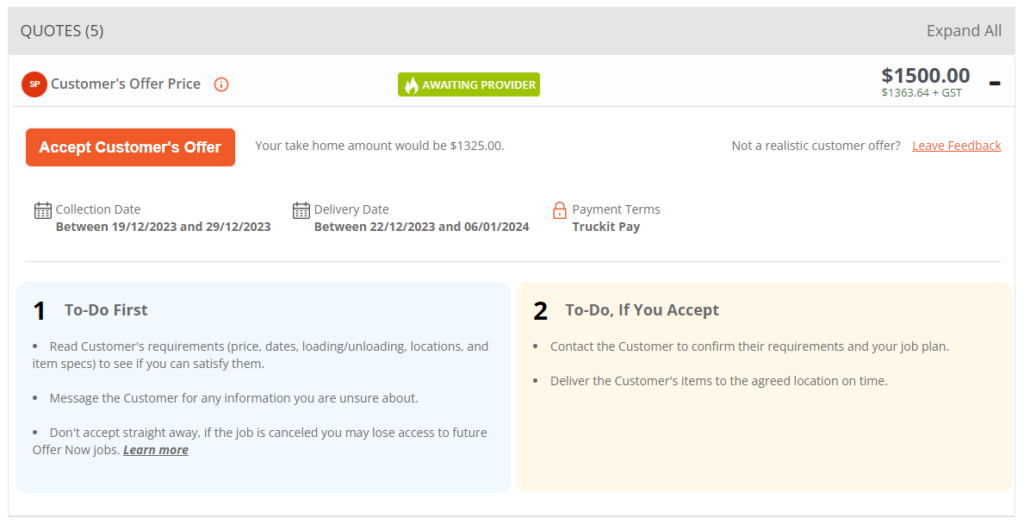
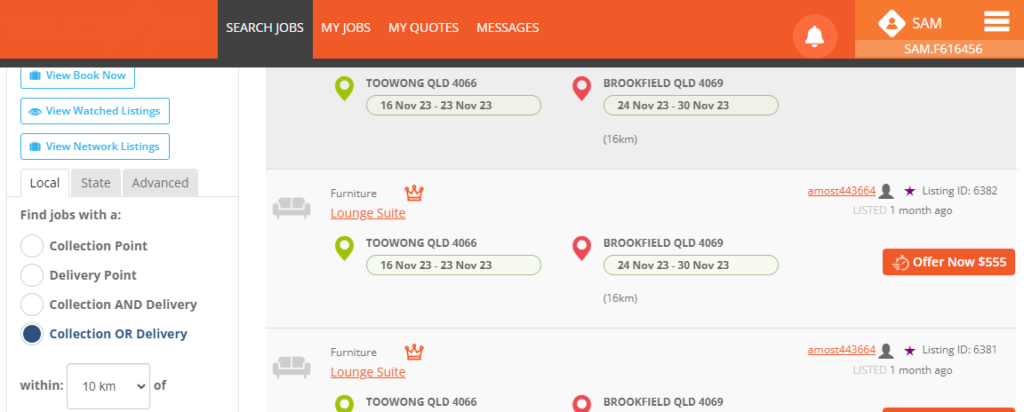
A new feature was recently launched on Truckit.net that allows Customers to Offer a price to Providers to instantly accept. If Providers don't like the Customer's Price they can still submit their own quote(s). As with normal Listings, only one Provider can accept the Customer's Offer and book the Job.
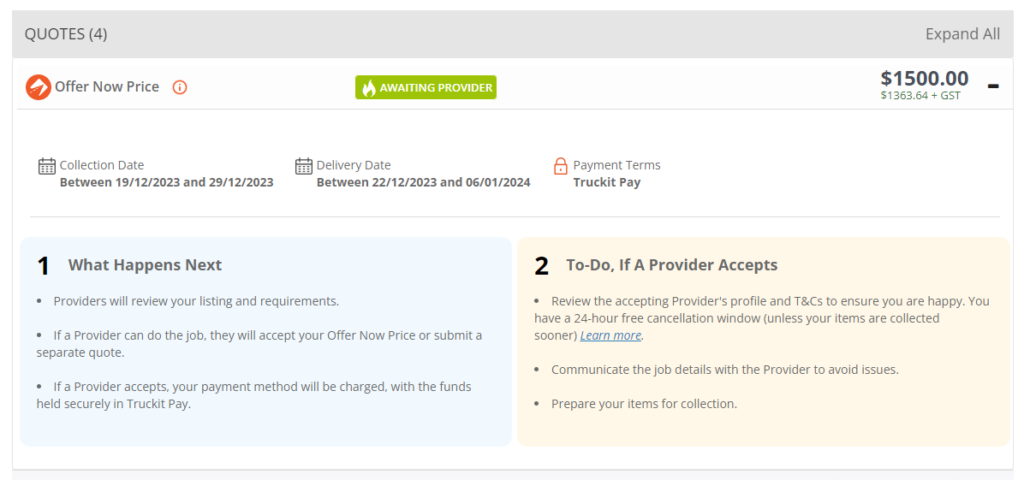
Why did we create Offer Now?
Offer Now was created to speed up the time between Listing creation and freight delivery, by reducing the time Customers and Providers spend negotiating. For some Customers speed is their main concern, and if they know what price they are prepared to spend on transporting their freight, then creating an Offer is a sure way to get their freight moving quickly. For Providers, the benefit of Offer Now (assuming the price is right) is being able to lock in Jobs quickly without having to negotiate with the Customers.
Which Customers can create an Offer?
👑 Customers who have Upgraded their Listing
🏢 Premium Business Customers
Why have we restricted Offer Now to these Customer Groups?
We believe these Customers groups have high knowledge of the going rate for transporting their freight and are highly incentivised to offer a reasonable price to Providers. In the future we may open up Offer Now to more Customer groups, however, ensuring that pricing is realistic will always be a top priority.
Which Providers can accept a Customer Offer?
Providers who meet all of the following requirements on Truckit.net:
🚚 10+ Jobs completed
😊 90%+ Positive Feedback
❌ 15% or less Cancellation Rate
Why have we restricted Offer Now to these Providers?
During the process of a Provider accepting a Customer's Offer, the Customer does not get the chance to review the Provider, until after the Listing becomes a Booking. While the Customer can still cancel for free within 24hrs of the Booking being created, avoiding this scenario occurring for both parties involved is important. The best way that we determined to achieve this, is through setting a minimum standard to determine which Providers can accept a Customer's Offer.
Note: there is one exception to this rule, where a Premium Business Customer has enabled "Allow all Providers to Accept" on their Listing. In this scenario any Active Provider on Truckit.net can accept the Customer's Offer.
To learn more about Offer Now read our Offer Now help article.
Keep an eye out for Offer Now listings on the Truckit marketplace, and if you need freight moved ASAP and know the price you are prepared to pay, then Offer Now!
TRANSCRIPT OF VIDEO
Hey Providers.
It's Rob here, I wanted to touch base before everyone goes on their Christmas and New Year break.
I know it's a really busy time of the year, but I thought I'd do a quick video to tell you about a few things, that's happening around the site.
And also thank you for all your hard work in 2023!
First thing, I want to let you know a little bit about Offer Now.
You may see some Listings coming through with Offer Now.
Now, that's where the Customer gets to name their price and you guys can accept it straight away.
It takes out all the negotiation, reduces the time spent on quoting, and speeds up the process.
It's only available to Customers who pay for that privilege.
So, it's sort of putting their money where their mouth is.
The next thing is, we've done a partnership with Stratton Finance. They are really good in the truck finance space. If you're looking for finance, to refinance a vehicle, or looking to buy a new vehicle as part of 2024 then you'll see there's a Truck Finance menu item in your Profile Settings. You can click on that and easily get a quote and then get their assistance.
We've got a pretty good deal with those guys and I think they'll be able to help you to the refinance or get new finance for a truck, so give it a try.
Another very important thing is we've launched our new Vehicle Manager. It's replacing Vehicle Types.
The Vehicle Manager now looks after a whole lot of data about the Vehicles you have and it's really important that we get that data right. It is very important that we know what it is that you are using so we can do all our matching algorithms correctly, to make sure we match you with the right jobs.
Also, we've got more of a sales team here that's more outbound in trying to connect you with contracted freight.
So it's really important to enter your correct vehicle data if you want to be part of that Premium Provider Program.
Finally, Merry Christmas guys and girls, have a fantastic Christmas and New Year's break.
No doubt there'll be the standard sort of things that go on in Australia with floods, cyclones, fires and rail outages. I know there'll be a lot of you standing by to help out when that happens.
We'll be keeping in touch with you, have a great time, Merry Christmas and have a safe break.
Cheers,
Rob
